



Key Points
- Major disruptions rarely emerge without warning; early indicators often surface across local reporting, social media, and internet activity in advance of a situation reaching its peak.
- Threat intelligence alone is not enough, with organizations needing a plan to ensure risk information reaches employees quickly and clearly.
- The speed of modern risk is accelerating, requiring businesses to develop capacities to monitor, contextualize, and respond to evolving threats in real time.
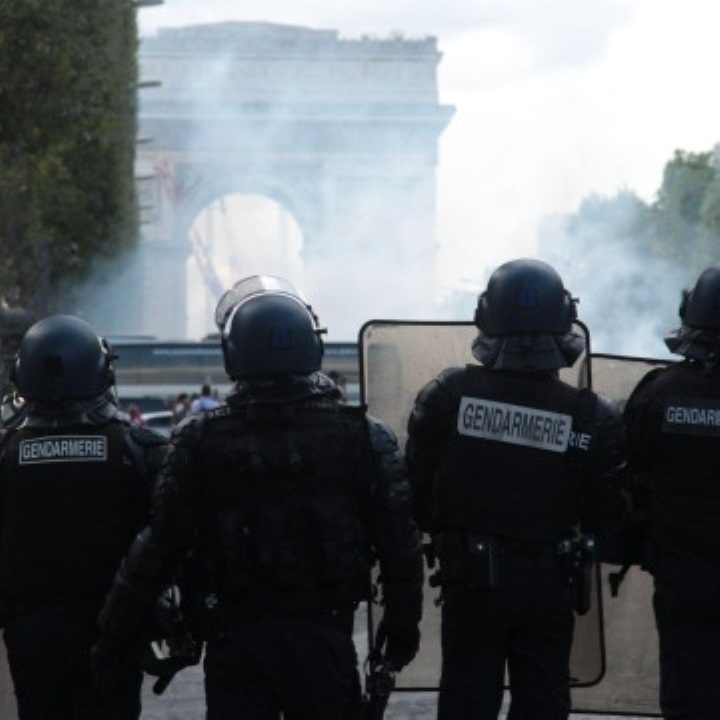
Seemingly overnight, what started as localized student demonstrations over teacher shortages and poor school conditions escalated into the worst riots France has seen in years, with stores looted, businesses vandalized, and iconic public buildings burning to the ground. But was it really ‘out of nowhere?’
While the violence itself erupted rapidly, the warning signs had been building for weeks, as social tensions intensified and public frustration spread beyond education issues to encompass rising living costs and declining public services. For businesses, it serves as a powerful reminder that in the age of social media, employee safety and business resilience depend on real-time threat monitoring and the ability to detect emerging risks before they become crises.
Early Detection
Weeks before rioters targeted department stores, banks, boutiques, and mobile phone retailers, students in Paris's northern suburbs had begun protesting teacher shortages and deteriorating facilities. The unrest gradually gained momentum, drawing support from broader segments of the public and expanding beyond its original grievances. By the time frustration over economic conditions and public services merged with the movement, the conditions for widespread disorder were already in place.
For organizations with employees, travelers, or operations in the region, the signals were visible well before images emerged of Limoges' city hall burning on news broadcasts around the world and protests jumped borders into Belgium, Portugal, and Italy. The critical question was whether or not organizations had upstream information streams capable of putting them on notice.
- Would we have recognized the early warning signs when the protests were still localized, or would we have first become aware of the threat when images of burning buildings dominated international headlines?
- If a similar situation emerged tomorrow in a city where we have employees, travelers, or operations, could we confidently say we would have enough lead time to protect our people and business interests?
[This challenge of identifying threats before they escalate is one of the drivers behind the Ligue's forthcoming Global Threat Thermometer, a new capability releasing later this year to help organizations better detect and contextualize emerging risks.]
From Risk Monitoring to Employee Action
Most experts in travel safety warn that the global risk environment is accelerating, with threats emerging and evolving faster than ever. Consequently, today’s businesses need both an intelligence program that can keep pace and a robust strategy to effectively communicate necessary information with the employees that need to know about it.
One global CSO for an international apparel company said the rapid emergence of risk has raised the stakes for knowing exactly where traveling employees are, as well as “staying ahead of threats, studying emerging markets to have a pulse on what the geopolitical risks are, what the societal risks are, and then what employees need to know to travel safely to those regions.”
Other leading experts noted the importance for travel safety teams to collect reports of emerging scams or crimes and to quickly integrate them into travel safety briefings.
Travel education increasingly needs to be timely to be relevant, as risks today may have a short life span but can have a significant impact on business travelers.
Safety is an important part of the travel management ecosystem that companies must enhance to meet the expectations of today’s workers—and coordination is key, say experts. Organizations should establish clear roles and responsibilities across relevant functions and designate accountable individuals for monitoring risks, evaluating potential impacts, and coordinating response actions when conditions deteriorate. Specifically, companies must ensure that the past slowdown in employee travel, which may have allowed some re-assigning or cuts in personnel, didn’t create gaps in responsibilities now that travel spending has returned to pre-pandemic levels.
Numerous departments have traditionally been involved in travel management, including risk, compliance, travel, medical, insurance, legal, human resources, and operations. And now, with travel issues requiring greater attention from wellness and sustainability departments, there are even more players in the travel picture than ever, note experts.
It’s critical for organizations that manage travel programs to be proactive in understanding today’s travel risks—including logistical and security and health—and to provide necessary support to employees. “A vital element is having access to accurate and up-to-date insight which can help travel function smoothly. This insight needs to account for new and emerging risks, such as emerging health issues, rising regional tensions, or crime concerns and disruptions,” one CSO noted.
Travel education is a key component of safety programs, say leaders, noting that sophisticated tools like real-time information platforms and good trip preparation and planning can easily come undone at the hands of clueless or careless travelers. Even the best intelligence capability can be undermined by travelers who are unprepared or unaware of the risks they face.
A recent survey of more than 1,200 business travelers found a wide variety of concerns on the minds of workers, with roughly one-third expressing concern about health emergencies, transportation accidents, crime, and natural disasters (“Traveler Insights: Travel Risk Management, BCD Travel Research and Intelligence, 2025). More concerning, nearly one-third of respondents did not know where to find their company's travel safety information, while roughly the same proportion were unsure whom to contact during an emergency.
The findings highlight a persistent gap between risk awareness and preparedness, reinforcing the importance of regular travel education and clear communication channels. Often, organizations invest heavily in monitoring travel risks behind the scenes but fail to communicate those efforts to employees, creating an information vacuum that can foster uncertainty and erode trust. Employees should frequently hear about the steps you take to monitor risks, how you’ll help them in an emergency situation, and what they should do to prepare for a business trip to mitigate possible problems, and how to access assistance when conditions deteriorate.
From Threat Information to Actionable Intelligence
With social media acting as an accelerant, global security risk from social unrest has been transformed. That, then, seems a critical point of review: How does our organization make sense of incidents that could spark unrest? Is the process sufficiently robust to immediately learn what’s happened, to anticipate what’s going to happen next, and to put it into context, assign risk levels, and facilitate a response?
How does our organization make sense of incidents that could spark unrest?
For businesses to mitigate harm from such events, information needs to be gathered, contextualized, compared against asset locations, and then acted upon. And it all must happen on the fly. In the aftermath of regional turmoil recently, a convened roundtable of security executives said they found themselves in “a new situation every day; sometimes every hour,” making it “important to continuously track activities and threats.”
Capacity-rich private security companies may help organizations meet these needs through real-time information platforms that permit clients to make more timely and informed decisions during critical events and to get a better sense of their scale. Typically cloud-based and operational 24/7, these platforms provide all-hazards, proactive, continuous threat monitoring to clients—and can relay critical intelligence to field agents on mobile devices.
Such expanded security services can also benefit clients in myriad ways beyond crisis event preparedness and response. For example, “security risk” is no longer narrowly defined by many companies. Harm today can include disinformation, rumor, propaganda, and negative company sentiment. Leading security firms can aim sophisticated algorithms and massive computing power at these enemies as well, searching both the surface Internet and its dark corners for a wide range of information that could prove damaging to a company, allowing it to respond before negative information takes a toll on company revenue.