





Key Points
- New analysis shows governments rarely evaluate digital maturity when procuring guarding services, leaving public institutions exposed to slower response and rising cyber risks.
- Digital tools — real-time reporting, secure data flows, dashboards, audit trails — are now core infrastructure for professional security; yet, they appear in only a fraction of tenders.
- With price weighted at a median of 85% in guarding contracts, critical quality indicators like cybersecurity and technological enhancements are routinely sidelined.
For all the talk today about “modernizing public services,” new data analysis show that governments fail to take digital maturity into account when contracting for physical security services, an oversight that leaves public institutions exposed to slower response, weaker accountability, and growing cyber risks at a moment when all three demand the opposite.
Given current rhetoric, one might expect government buyers of guarding services to be laser focused on the benefits of technology — faster response, better visibility, stronger accountability — and equally alert to the dangers of poor digital hygiene. Yet the opposite is true, according to an extensive review of public procurement practices.
Real-time reporting — a basic feature of modern guarding — appears in just 3% of tenders.
Across Europe, public authorities continue awarding guarding contracts as if digital capability were optional, cybersecurity were irrelevant, and information management were a luxury rather than a basic requirement of professional security. The result is a procurement landscape where the benefits of digital maturity are left on the table, and the risks of outdated systems are quietly absorbed by the public.
How Governments Benefit When Guard Providers Are Digitally Mature
Modern guarding is no longer a clipboard-and-walkie-talkie profession. Today’s frontline security depends on digital tools for reporting, monitoring, communication, and data sharing. When a provider has mature digital systems, the contracting authority gains something invaluable: real visibility into what is happening on their premises.
Digitally capable firms can deliver:
- Real-time reporting from officers in the field
- Automated incident logs and digital audit trails
- Cloud-based compliance tools that reduce administrative burden
- Dashboards that give clients live situational awareness
- Interoperability with client systems for seamless data exchange
Rather than bells and whistles, these are infrastructure enhancements that allow a public authority to make faster decisions, verify service delivery, and respond to emerging risks with confidence. Authorities that evaluate digital maturity benefit from improved accountability, more efficient operations, and a service that actually reflects the complexity of today’s security environment.
There is a financial angle, too. Digital maturity is a quality indicator that reliably produces a positive return-on-investment. Better, faster information means fewer blind spots, fewer delays, and fewer costly failures.
The Dangers of Contracting with Firms Lacking Demonstrable Digital Hygiene
If the benefits of digital maturity are clear, the dangers of ignoring it are even clearer.
A provider lacking digital tools leaves authorities with paper-based processes that slow incident response and obscure what is happening on the ground. Without real time updates, supervisors cannot coordinate effectively. Without digital audit trails, accountability evaporates. Without secure data flows, sensitive information is exposed.
And the stakes are rising. Cyber risks targeting public institutions have surged across Europe — ransomware attacks on municipal systems, breaches of public-sector databases, and intrusions into critical infrastructure networks. Recent reporting from the European Union Agency for Cybersecurity (ENISA) and national cybersecurity agencies shows a sharp increase in attacks exploiting weak authentication, outdated software, and unsecured data flows. Public administration is now the most targeted sector in the EU, accounting for 38.5% of all recorded cyber incidents (ENISA Threat Landscape, 2025)
In this environment, contracting with a guarding provider that lacks basic information security practices is dangerous — not just inefficient.
Security firms today handle access logs, incident reports, video feeds, and personal data. If those systems are not protected by strong information management practices — ISO 27001-aligned controls, encryption, secure cloud storage — the public authority inherits the risk.
And then there is response time. During an emergency, minutes determine whether an incident is contained or spirals into crisis. Modern digital tools allow officers to instantly signal for help, supervisors to locate threats, and law enforcement to be notified without delay. Many firms have invested heavily in these capabilities. But if governments never ask about them, they never benefit from them — and the public is left with slower, less coordinated response.
What the GSB Pulse Found — and Why It Matters
The Ligue’s research examined whether public tenders evaluate bidders’ digital maturity and information management. Analysis captured whether tenders evaluated any aspect of a bidder’s capabilities, including:
- Digital tools for reporting, monitoring, or service delivery
- Real-time or electronic data sharing
- Dashboards or client access to live information
- Information security standards (e.g., ISO 27001)
- Integration with client systems
- Digital audit trails or automated reporting
What did analysis find? Do public authorities consider these or related factors? Rarely.
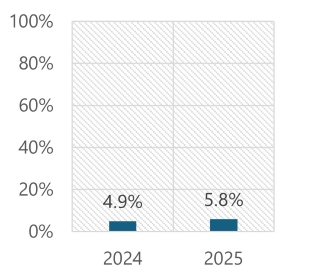
- Only 5.8% of tenders include digital maturity in award criteria.
- Only 23.6% mention any aspect of digital capability anywhere in the tender.
- “Real-time reporting” — a basic feature of modern guarding — appears in just 3% of tenders.
And even these numbers may paint too rosy a picture. The analysis counted any mention of digital tools, even if vague or superficial. It did not judge how rigorous the requirement was — only that it existed. In other words, these troubling results reflect procurement practices in their most favorable light.
If governments are serious about “modernizing public services” and truly want safer communities, faster response, and more accountable services, they should stop treating digital capability as optional.
And digital maturity is not the only oversight, according to the Ligue’s GSB Pulse, Public Procurement of Security Services – Europe. Training programs are rarely examined. Health and safety records even less so. Financial stability receives middling attention. Continuous improvement barely registers.
So, if not technical capability, cyber hygiene, training, safety, or stability — then what is driving procurement decisions? Research answers that, too: price. Contract award data shows price carries a median weighting of 85% in guarding tenders. Half of all tenders weight price above 85%. When cost dominates to this degree, quality indicators — including digital maturity — become afterthoughts.
When cost dominates to this degree, quality indicators — including digital maturity — become afterthoughts.
Digital Blindness Is a Public Risk
Digital maturity is no longer a niche concern. It is a frontline requirement for professional guarding services. And governments that ignore it aren’t saving money, they’re accepting risk, forfeiting visibility, slowing response, and exposing themselves to cyber vulnerabilities at a time when those threats are multiplying.
Many security firms have invested heavily in digital tools, widening the gap between what leading providers and outdated competitors can deliver. But public authorities only benefit from those investments if they make them a consideration when selecting a security partner.
If governments are serious about “modernizing public services” and truly want safer communities, faster response, and more accountable services, they should stop treating digital capability as optional — and start recognizing it as foundational to modern security services.