



Key Points
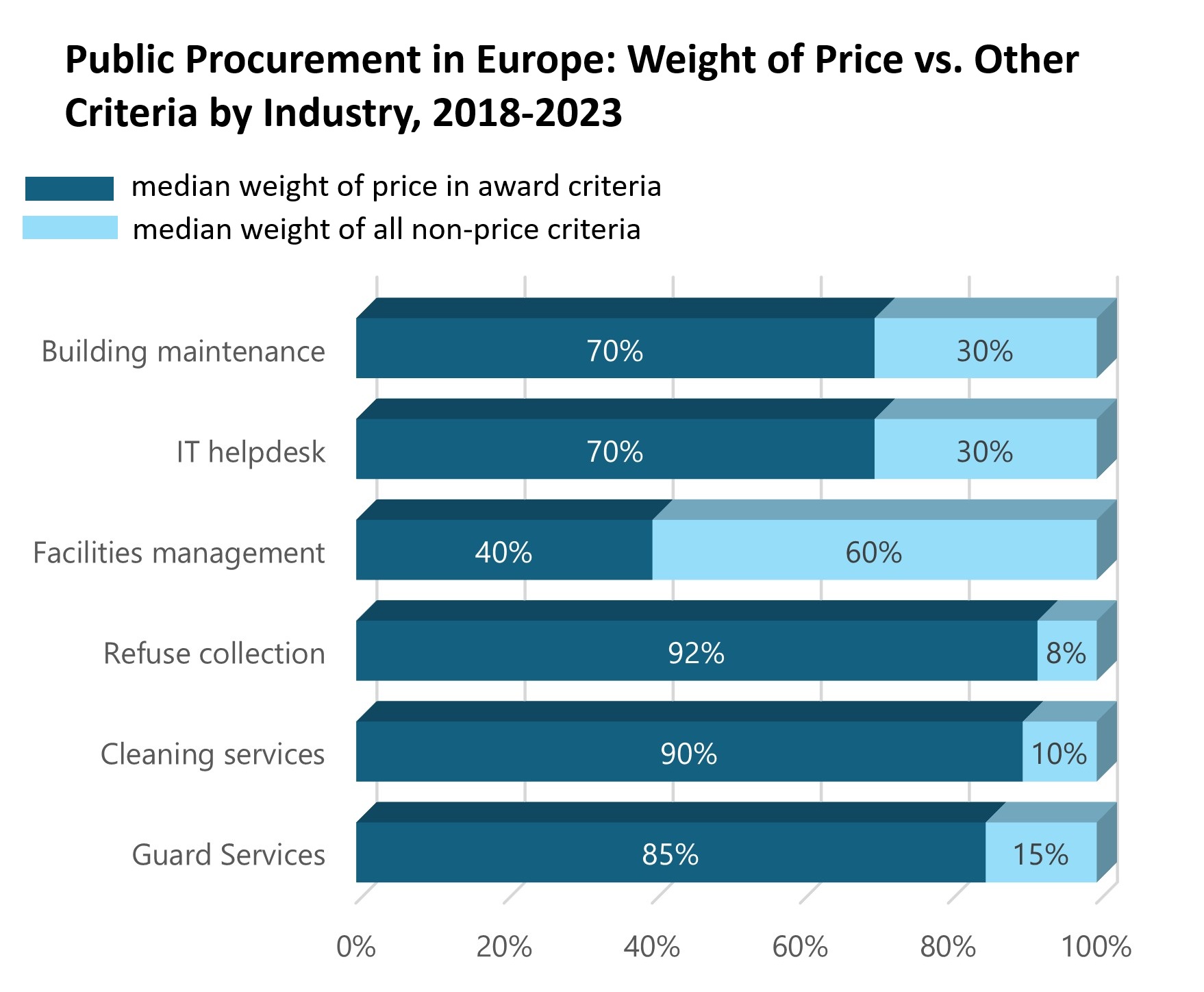
- Price dominates security procurement, with a median weighting of 85% — far higher than other professionalized service categories.
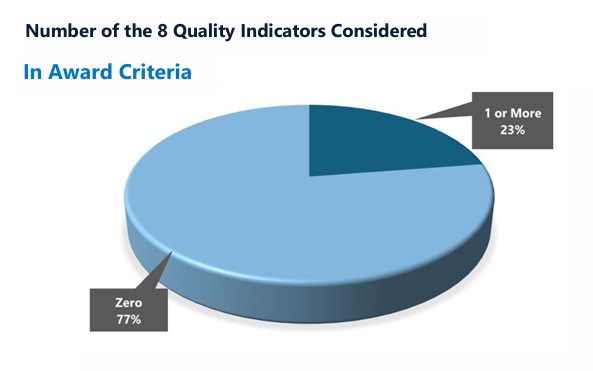
- Quality is systematically overlooked, with 77% of tenders failing to include any of the eight core quality indicators that shape security contract performance.
- The consequences are structural, incentivizing a race‑to‑the‑bottom in wages, training, and working conditions — though some signs suggest momentum toward more quality‑centric procurement.
Price continues to dominate procurement decisions for guarding services, with an average weighting of 85% since 2018, according to new research by the International Security Ligue. Built on nearly 40,000 tender records, the Ligue’s latest GSB Pulse sheds unprecedented light on how public authorities purchase security services — and what that means for taxpayers, frontline security professionals, and public safety.
“The results confirm something many practitioners had long suspected: price remains structurally dominant in guarding contracts, even in procurement systems that formally encourage quality-based awards,” said Stefan Huber, Executive Director of the International Security Ligue. “The reality on the ground is that price still hijacks the process.”
The reality on the ground is that price still hijacks the process.
The 85% price weighting is more closely related to findings for refuse collection and cleaning services (92% and 90%, respectively) than to other professionalized service categories — despite the mission critical nature of security work and the risks associated with contract failure. By comparison, the weight of price is less than half in awards for Facilities Management contracts (40%).
Quality is Largely Missing from Today’s Tenders
Derived from consultations with security experts, the new report outlines model procurement practices and extracts 8 key indicators that shape service quality in security contracts, such as the competence of frontline officers, the fairness of security firms’ employment practices, and their financial health. Extensive data analysis then reveals whether these indicators are considered in procurement of guarding services.
The results reflect dangerous oversights in public procurement of guarding services in Europe, according to Huber. “Training programs of bidders are rarely examined; health and safety records even less so. The financial stability of security firms seems to be of middling concern, and a bidder’s commitment to continuous improvement is an afterthought.”
Training programs of bidders are rarely examined; health and safety records even less so. The financial stability of security firms seems to be of middling concern, and a bidder’s commitment to continuous improvement is an after thought.
More than 6-in-10 tenders, in their entirety, address only 2 or fewer of the 8 quality elements. And, specific to awarding criteria, 77% of tenders do not address any of the 8 quality indicators. Consequently, current procurement practices are working against the very mission of governments to empower workers and alleviate poverty.
Public procurement practices directly impact the lives of frontline security professionals. Salaries, training, working conditions — they are all subject to market forces, so when procurement practices encourage a race-to-the-bottom, the lives of security professionals get demonstrably worse.
“A price-focused approach catalyzes substandard wages and penalizes the very companies that are committed to the goals that governments advocate,” explained Garett Seivold, one of the Ligue’s researchers who worked on the report. “Public procurement provides public authorities with a key lever of influence to improve market conditions, but they aren’t using it.”
Critical Elements are Systematically Overlooked
In 2025, training-related elements appeared in just 24.9% of tenders — and only 10.6% of tenders included training in the award criteria, the part of the process that actually determines who wins. Requirements for refresher or continuous training were almost nonexistent, appearing in only 1.4% of award criteria. In other words, a bidder’s commitment to maintaining officer competence over time is almost never evaluated.
This omission is not benign. It shapes the market.
Training is expensive. Firms that invest in it carry higher operating costs. When procurement systems ignore training quality and reward the lowest bid, governments inadvertently tilt the playing field toward companies that minimize training to keep prices low. The result is predictable: responsible firms are penalized, undertrained officers are deployed, and the public receives a lower standard of safety than it pays for.
The findings are similar with respect to the safety and health of frontline professionals.
Only 1-in-4 tenders mention health and safety at all, and just 5.3% include it in award criteria. Failing to consider health and safety when making contract awards exposes public authorities to preventable accidents, liability claims, operational disruptions, and reputational risk. More importantly, it exposes security officers to avoidable harm.
A similar story emerged from examination of the other 6 quality indicators, with analysis revealing consistently low rates of inclusion in award criteria.
- Fewer than 8% consider a firm’s employment practices, such as limits on excessive overtime or compliance with collective bargaining.
- Less than 1% evaluate a bidder’s financial health, insurance coverage, claims history, and overall business stability.
- 5.8% assess a bidder’s technology infrastructure, such as their digital reporting capabilities, information security practices, and ability to share data efficiently with the contracting authority.
- 11.8% of tenders consider a bidder’s HR practices, including turnover and absenteeism rates, reliance on temporary staff, and recruitment and vetting standards.
- 5.1% evaluate a bidder’s experience delivering similar contracts, sector specific expertise, client references, or evidence of successful performance.
- 12.8% include mention in the award criteria of a bidder’s quality assurance systems, business continuity plans, or crisis management capabilities.
By failing to recognize the importance of these elements within government tenders for security, governments unintentionally incentivize a race to the bottom in wages, training, and working conditions, as well as hindering the growth of professionalism in the security industry. Government also miss an opportunity to deliver a strong return on investment for taxpayers. The more quality elements that public authorities consider, the better positioned they are to select partners who can manage risk, support their workforce, and sustain performance over time.
Momentum Builds for Reform
The study reveals a pressing need for relevant quality measures to be a more important part of security contract awards, but there is reason to be hopeful that a more quality-centric future can emerge. Analysis shows that while consideration of quality elements is extremely low, it has been growing. All 8 Quality Indicators were included at higher rates in 2025 compared to 2024 levels.
“The International Security Ligue’s analysis of 40,000 procurement decisions across Europe shows meaningful movement away from price-driven awards toward quality and sustainability,” according to Prof. Dr. Harald Olschok, Honorary Professor in security at the Berlin School of Economics and one of the report’s expert contributors. “But we are not at the end of the path to more quality in public procurement.”
Meaningful progress requires more than merely mentioning quality in security tenders, explains the Ligue’s Stefan Huber. “A key question raised by this research, which goes beyond how heavily price is weighted, is whether procurement systems and the project teams implementing them are equipped to define, evaluate, and manage quality consistently in a service as critical as security.”
A key question raised by this research, which goes beyond how heavily price is weighted, is whether procurement systems and the project teams implementing them are equipped to define, evaluate, and manage quality consistently in a service as critical as security.
The study of data in Europe is the first stage of the International Security Ligue’s global, long term research initiative to illuminate structural patterns in security procurement. It pulls back the curtain on multiple aspects of public procurement for security services, including key market data such as the frequency of framework agreements; tender-to-award timeframes, supplier profiles, procedure type, contract value, and competition level (for example: with a slight variation based on contract value, the number of bids fluctuated in a narrow range between a high of 7.4 per tender in 2020 and a low of 4.7 in 2013).
The Ligue’s GSB Pulse: Public Procurement of Security Services (Europe) is made free to the public and can be downloaded at: https://www.international-security-ligue.org/initiatives/responsible-tendering
About the International Security Ligue
Founded in 1934, the International Security Ligue works to promote, advance, and professionalize the private security industry. The Ligue is represented in 90 countries by more than two million professionals and provides a global voice for the security profession. As a resource for members and the public, the Ligue provides an active forum to understand global trends, collect and analyze data, and explore innovative ideas.