



Introduction
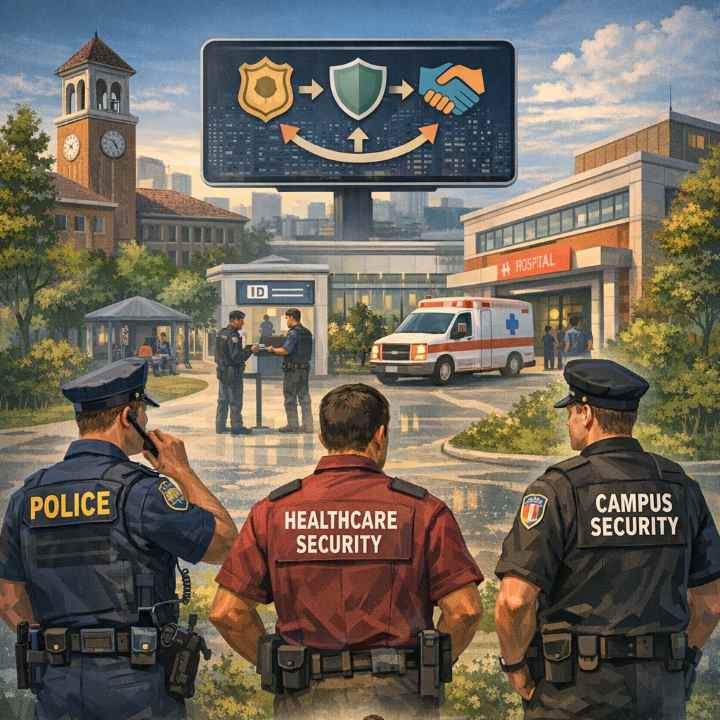
In some environments different types of security personnel (with different levels and sources of authority) and separate security organizations may work alongside one another. In these complicated security arrangements, coordination can be a challenge, and problems may arise, including lack of coordination, misunderstanding of roles and responsibilities, confusion over the population being served, mistrust, and absence of a shared vision. This was happening at a University in the U.S. several years ago, which had 3 separate security organizations serving the university community. One utilized “sworn police officers” (with arrest authority), and two comprised of “non-sworn” private-authority officers (personnel who provide protection, deterrence, access control, and safety functions but do not hold state granted police powers).
Opportunity
Consultants examining the arrangement found the 3 security organizations were well-run, professional, and efficient on their own, but “a lack of formal and insufficient informal connection between the three resulted in significant lack of coordination.” They found that: 1. Separate reporting lines among the three security directors created inefficiency, cultural friction, and inconsistent performance expectations. 2. A shared “Public Safety” branding confused students, staff, patients, and visitors, who often assumed they were dealing with police when interacting with healthcare or campus security—leading to unmet and unrealistic expectations. 3. A culture of fear and blame existed between the three organizations, marked by poor communication, low trust, and limited respect for each group’s role. Several interviewees noted that police often dismissed the responsibilities and regulatory constraints of healthcare security, for example.
Solution/Approach
Enhancing coordination across multiple security entities is essential for building a unified security culture. The recommendations offered to the University apply broadly wherever different security organizations operate side by side.
- Create shared leadership. Unifying security departments under a single executive director helps establish a common vision and consistent expectations.
- Adopt a unified practice guide. Even if agencies keep their own leadership, they should follow the same “playbook.” Common standards improve communication, trust, and clarity around roles. Key areas include:
- Policies & Procedures: reporting, investigations, hiring, shared resources, emergency management
- Technology: joint assessment, integration, and funding
- Training: regular joint training and legal requirement alignment
- Develop a brand strategy. Clear, coordinated branding reduces public confusion and aligns expectations. Consistent uniforms, logos, signage, and messaging help communities understand each organization’s role within the broader mission.
Finally, frequent cross agency meetings — informal weekly check ins and bi weekly operational meetings — keep leaders aligned, surface issues early, and reinforce shared priorities.
Get a downloadable version of this case study here.