





Key Takeaways
- Public concern over shoplifting is rising worldwide, with search‑interest data and local reporting showing the issuemoving from a nuisance to a material threat for retailers.
- Economic pressure, organized retail crime,weakened deterrence, and social‑media amplification are converging to drive both higher incident levels and greater visibility of theft.
- Retailers could benefit from a comprehensive security approach that combines technology and people, and by embracing a moreintelligence‑led, predictive protection posture to identify appropriate countermeasures, anticipate theft patterns, and disrupt organized activity.
Around the world, shoplifting has always been a stubborn nuisance for small shopkeepers and big-box retailers alike, but there are indications that losses are moving from the margins to the material, revealing a need for retailers to take the pieces of protection they’ve relied upon and coalesce them into a smarter, more coherent protection posture.
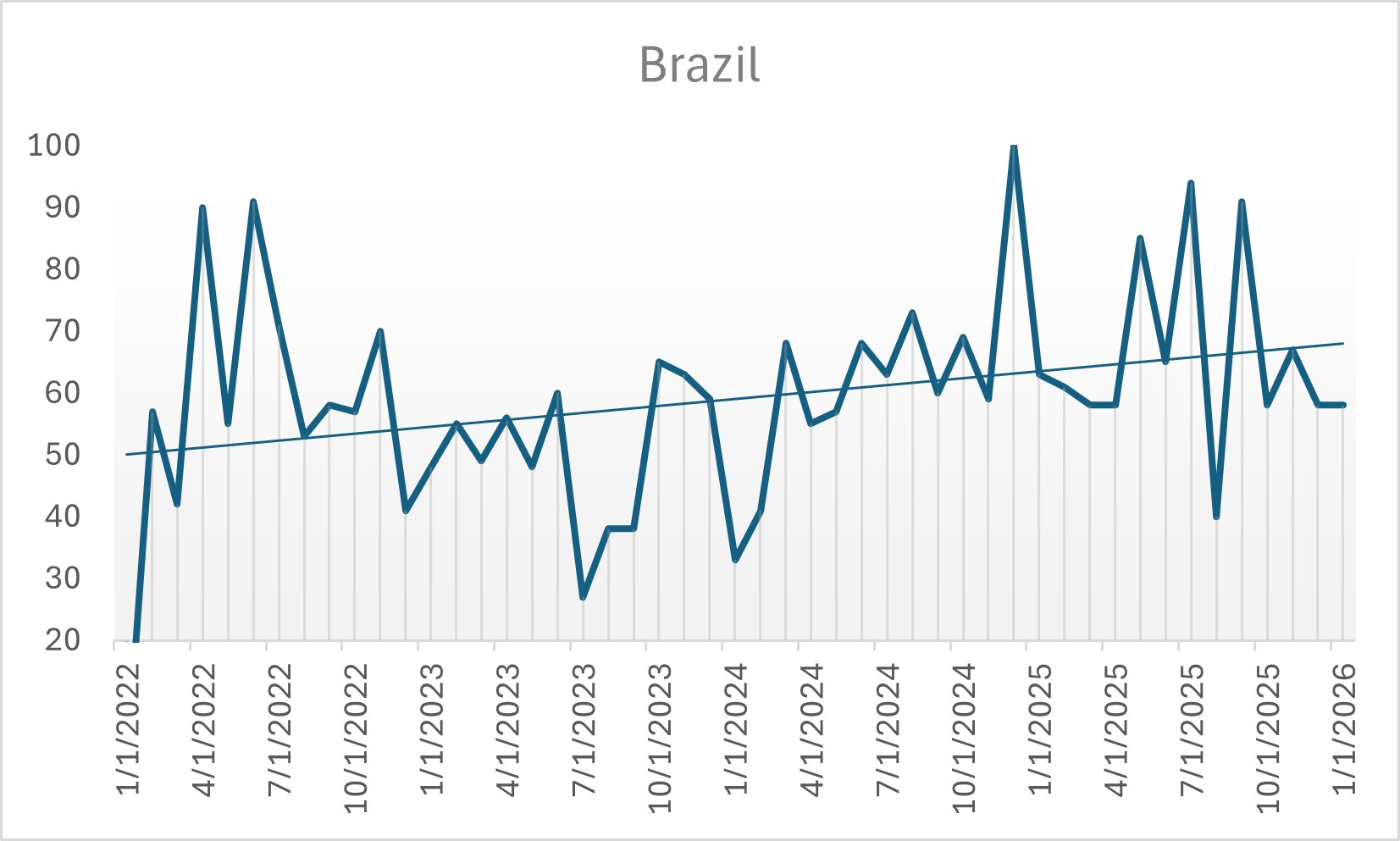
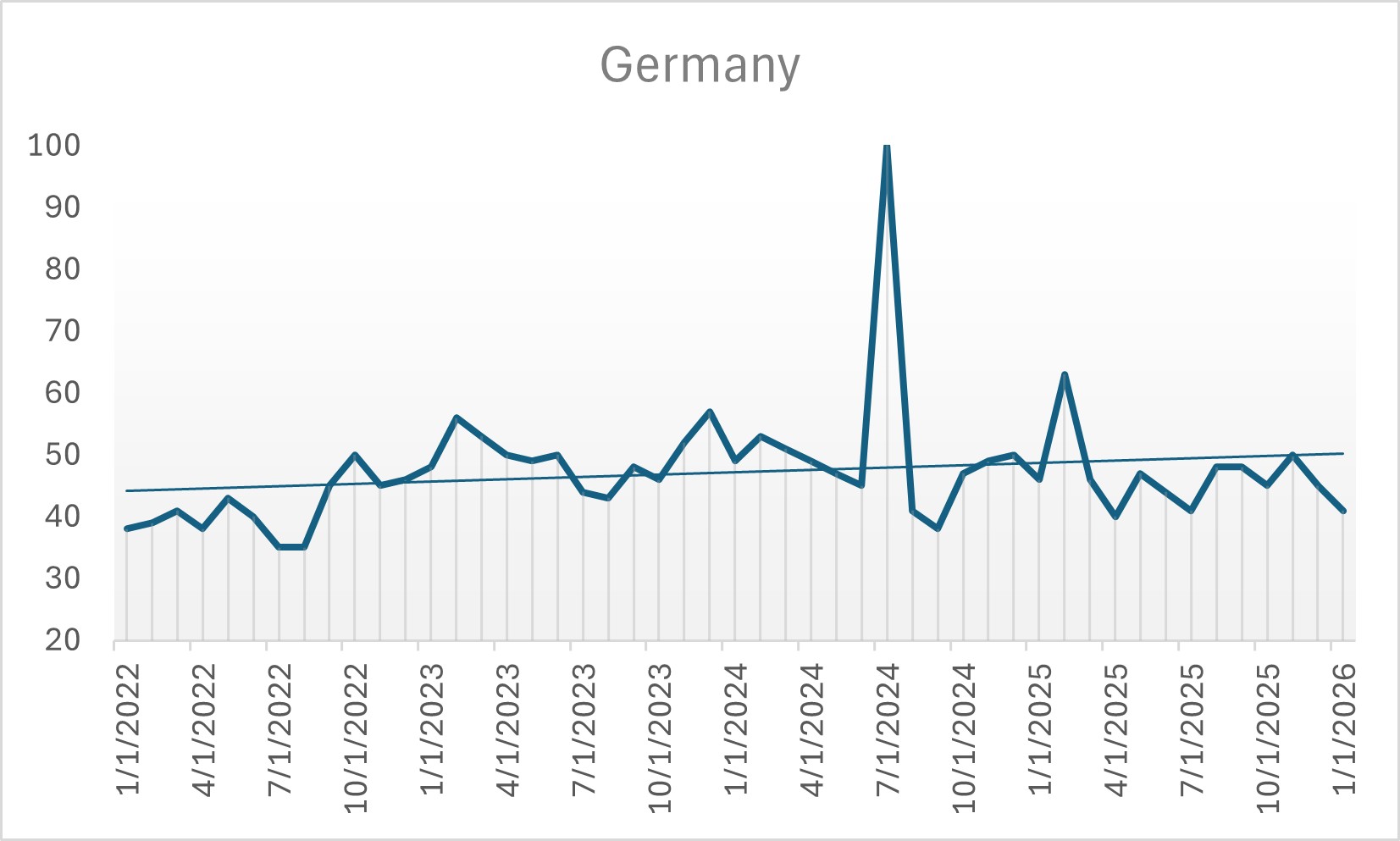
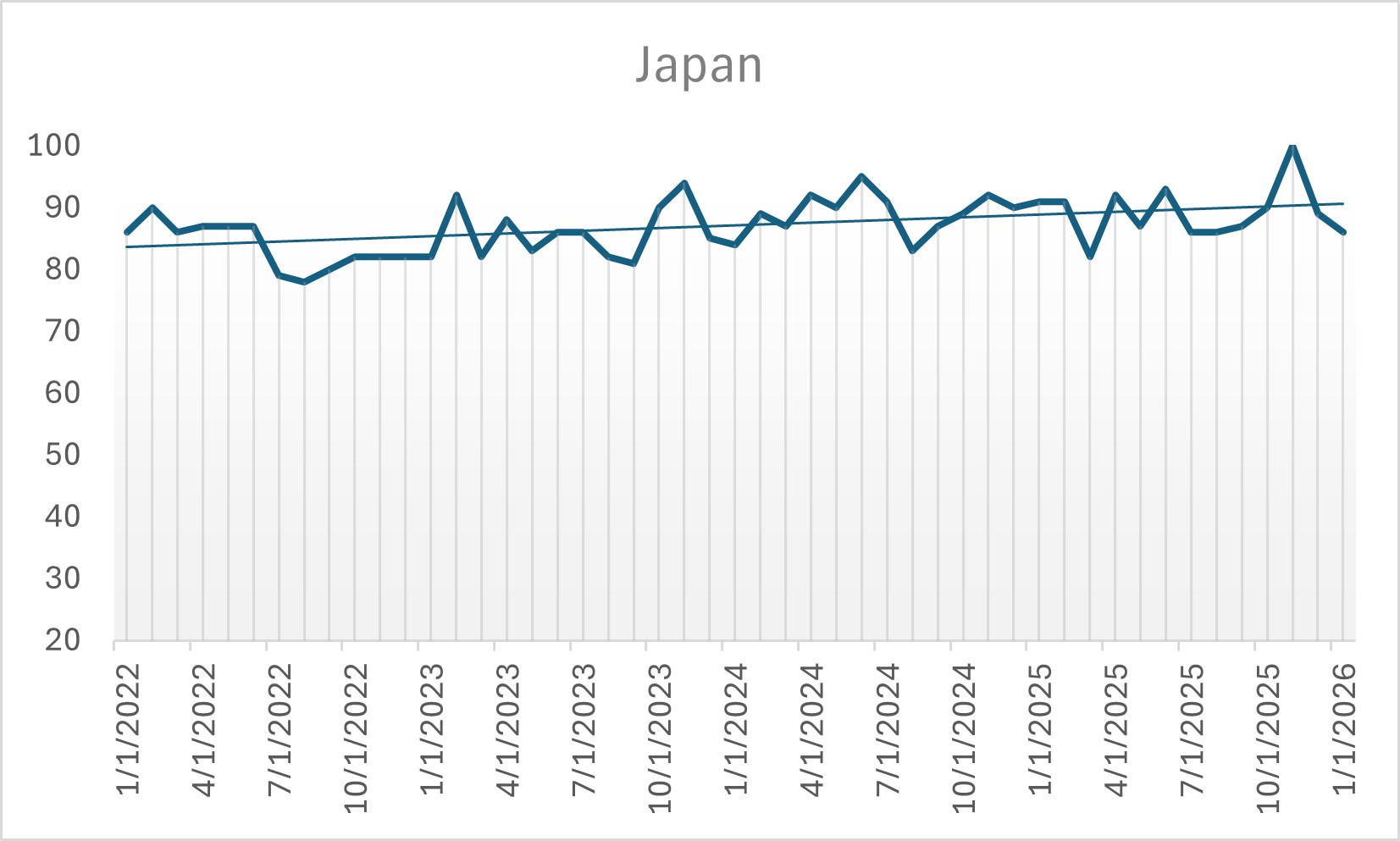
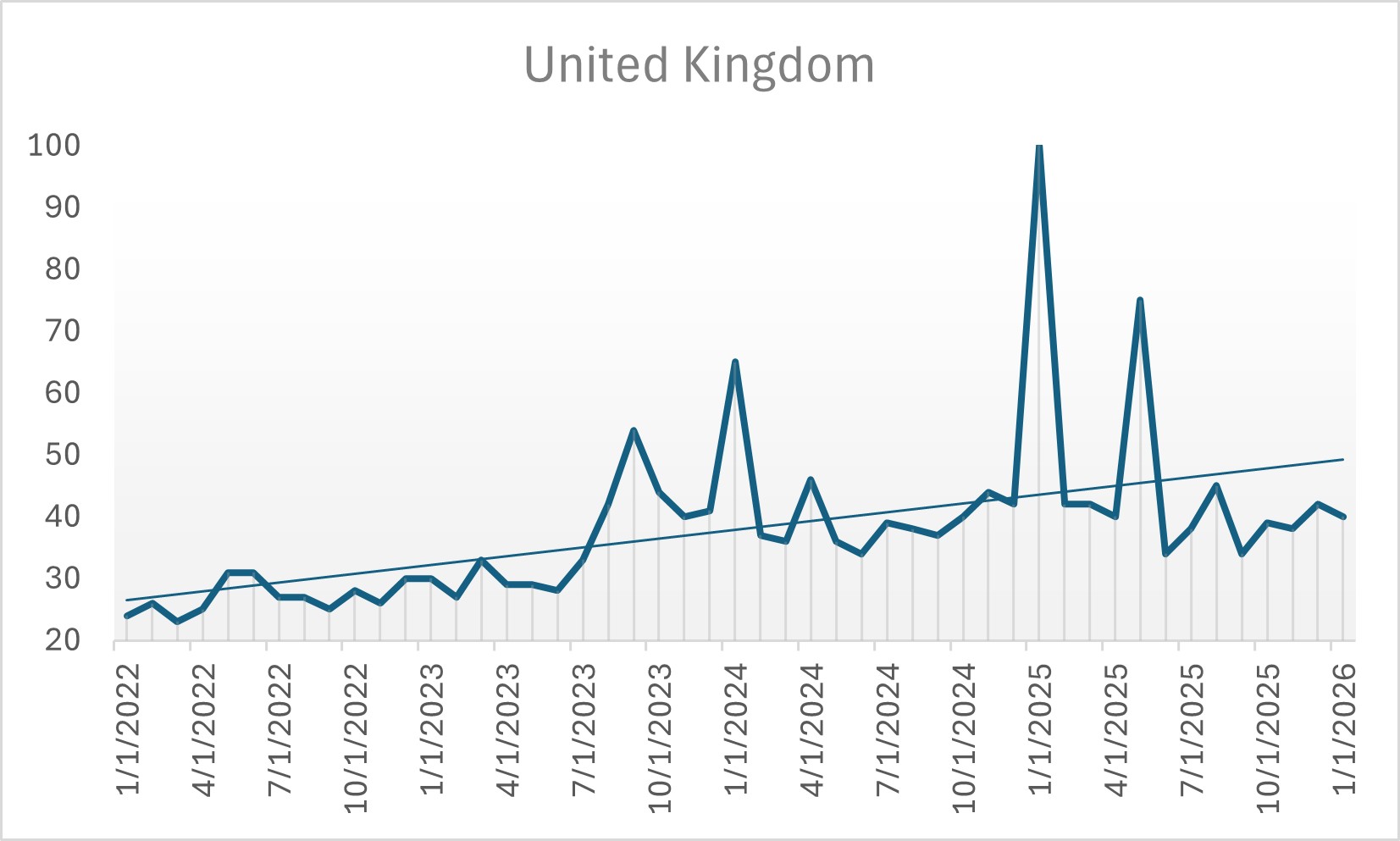
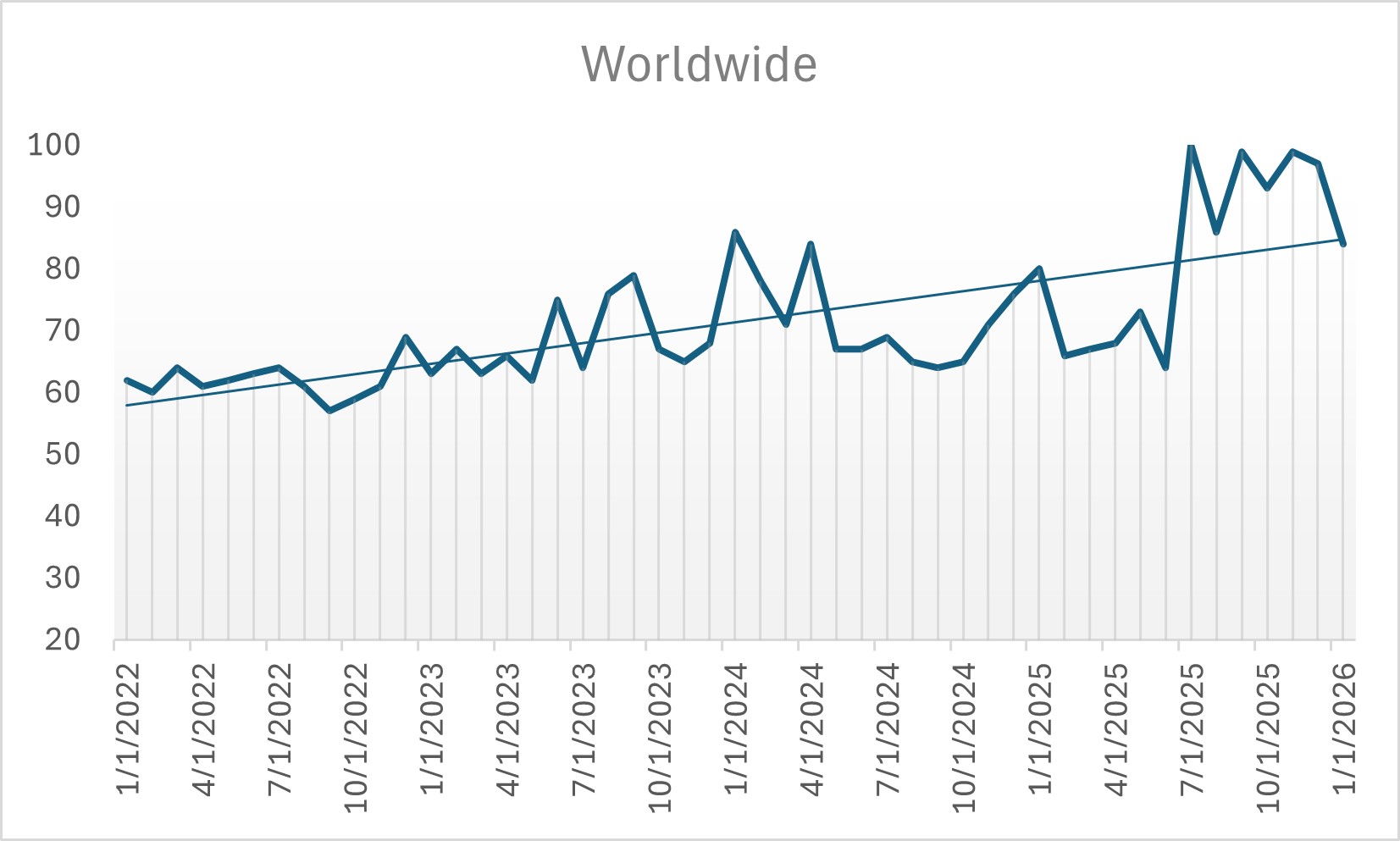
Although it’s not an exact measure, analyzing Internet queries offers a revealing glimpse into how heavily a specific subject weighs on people’s minds. We randomly picked four countries—Germany, Brazil, Japan, and the UK—and examined how Google searches for “shoplifting” (or the local language equivalent) have been trending.
In each, and in a corresponding global-level query, results show that people have been increasingly looking for information related to store theft. Although not necessarily an indicator of a surge in incidents, upward trends signal heightened public concern and media attention and show more people are searching the topic now than in the past.
Of the countries examined, searches in Japan for “shoplifting” have stayed closest to its peak level across the period examined,while the other countries experienced larger ups and downs relative to their own peaks. In all cases, however, the trend reflects growing public interest int he problem.
Additional Indicators
Local reporting and recent studies offer additional indications that shoplifting may be moving from a nuisance to something more worrying. In Canada, for example, Halifax Regional Police recently reported a 64% jump in shoplifting between 2023 and 2025, a factor some shops cited publicly in their decision to shutter their doors. “People can’t afford things, so they’re stealing, they’re simply stealing,” said Sue Uteck, executive director for the Spring Garden Business Association, which offers grants to help business upgrade security. (Halifax businesses grappling with double-digit increase in shoplifting, Global News, April 13, 2026.)
People can’t afford things, so they’re stealing, they’re simply stealing.
The surge in shoplifting in the Maritimes is consistent with a nationwide trends, according to recent findings by the Canadian Federation of Independent Business. Its research discovered that half of Canada’s small businesses say their community saw an increase in crime in 2025, with only 2% reporting a decrease (How Crime and Disorder are Reshaping Daily Life for Canada’s Small Businesses, CFIB, Insight Bizblog, April 8, 2026).
In the UK, recent data from the Office of National Statistics showed shoplifting incidents increased to 519,381 incidents in the year ending September 2025, from 492,660 the year prior. It has become so common that the British press now regularly uses “epidemic” to describe the state of shoplifting. (e.g., Costa Coffee 'hires bouncers to guard food and drink' as High Street battles shoplifting epidemic, Daily Mail, April 11, 2026; UK's 'cuddly' shoplifting epidemic is being fuelled by international crime syndicates, Express, April 13, 2026).
Crime policy advisers at the British Retail Consortium say the increase in incidents is causing growing economic damage to retailers across the country and is being driven by dangerous forces, “with gangs systematically targeting one store after another.” Indeed, while this article focuses on losses from growing shoplifting rates, the growing risk of violence and harm to shop staff and customers is an even more significant problem.
Gangs [are] systematically targeting one store after another.
What’s Behind It?
Recent academic studies and industry surveys suggest the rise in shoplifting, and the corresponding increase in public attention to it, reflects several interacting causes, including economic pressure on households and the rising cost of living, growth of organized retail crime networks that resell stolen goods, and amplification by social media and viral videos that normalize or advertise theft tactics. Poverty is driving offending, and so is impunity, say experts. (Sample of recent industry analysis: Line of Thought: Examining the Concerning Rise of Organized Retail Theft, Verisk, March 2025.)
Many experts also point to changes in policing priorities that limit attention on shoplifting and increasingly leave shop owners to fend for themselves. These experts also note—that as bad the problem is known to be—it's probably even worse. Less police response contributes to an undercounting of shoplifting incidents and their economic harm. A 2025 study by the Retail Industry Leaders Association found that only a small fraction of external theft incidents to law enforcement and that the rate of reporting has fallen to about half of what it was in 2019, largely due to low expectations of a law enforcement response. (2024 Study Reveals Retail Theft Is Underreported, RILA, April 22, 2025).
A Multi-Layered Defense
With concern over the impact of store theft on profitability at a fever pitch, how should retailers respond? Increasing use of retail security technology is certainly one part of a robust, multi-faceted solution — but it has limitations. Criminals have shown a willingness to respond to added surveillance technology by becoming brazen and bolder.
The “fear factor” around technology may also be waning. As surveillance cameras and electronic article surveillance systems have become more familiar, so have their limitations, so perhaps it is unsurprising that experts in Japan are finding that shoplifters are more deterred by security personnel, store greeters, and interactive staff than by hi-tech surveillance (Japan’s shoplifters hate a simple ‘hello’ more than cameras, Jan. 4, 2026).
Traditional product protection strategies, human-led deterrence, and surveillance technologies are integral to an asset protection solution. But especially for large retailers, waging war on shoplifting also requires identifying innovative solutions and right-fit strategies, something that can be unlocked by embracing ‘intelligence-led loss prevention.’
Transitioning to a more intelligence-based response to theft activity requires tying individual events to data so you can then do something about it. Just as sellers leverage sales intelligence to make better marketing and product acquisition decisions, they need to capture more data around loss events so security teams can make smart choices about countermeasures to prevent theft. With greater visibility into theft events, retailers can transition to more predictive asset protection, as data can show not only where and what theft occurred, but what is likely to happen next.
Machine learning and artificial intelligence can help fuel a transition to proactive store security. Leading global retailers are already leveraging it to glimpse the future of the sales environment — using AI for predictive price and forecast simulations, for example. For store security, these advances offer increasingly smart pattern detection in retail transactions, facilitating identification of previously undetected fraud and more accurate distinguishing between problematic and legitimate transactions.
New data tools allow for a similarly predictive approach across the entire loss prevention spectrum.
- Proactive online social monitoring — for what is being said online about a retailer — can provide upstream intelligence about theft rings, counterfeiting, brand erosion, and violent individuals.
- Advanced business intelligence tools offer opportunities to minimize the impact of crisis events.
- New cash management solutions offerreal-time data rather than weekly or monthly reports, allowing LP to proactively manage risk.
In just about every area of retail security — and for any type of potential disruption — the opportunity for retail security to be more proactive (and thus more valuable to the bottom line) is growing.